BEHAVIOR SOLUTIONS

Does your dog:
- Jump all over your guests the moment they arrive?
- Take you for a drag on a walk instead strolling politely by your side?
- Steal food from the counter the second your back is turned?
- Bolt out the door, dash through the front gate or leap out of the car before you are ready?
- Forget everything you thought he knewthe moment you leave the house and go to town together?
- Suffer from ‘selective hearing’ whenever you call him to ‘come’?
When you first brought him home, did you dream of your dog being an integrated part of your family life, but find he now gets left behind because his behavior makes gatherings too stressful? While these common frustrations are often labeled as ‘behavior problems,’ they all have very clear, straightforward solutions. I am here to help you navigate these exact challenges and restore the joy in your relationship.
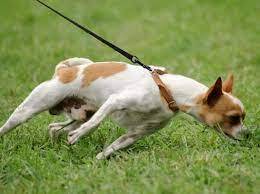
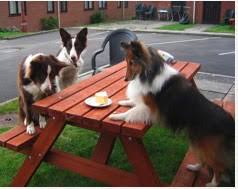
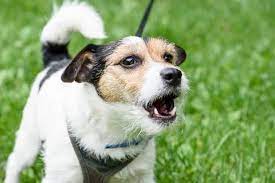
Much of what is often referred to as ‘aggression’ can be more accurately described as ‘reactivity’. When a dog reacts intensely to an environmental trigger, our human assumptions about the cause may not always be accurate. Behaviorally, reactivity is a conditioned emotional response. Dogs are not born with these patterns; they learn them over time through experience. Therefore, we must address the root emotional distress rather than just treating the visible behavior, which is simply a symptom of the underlying issue. If we ignore the emotional trigger and simply punish or discipline the outward behavior, we run a severe risk of escalating the exact response we want to stop.
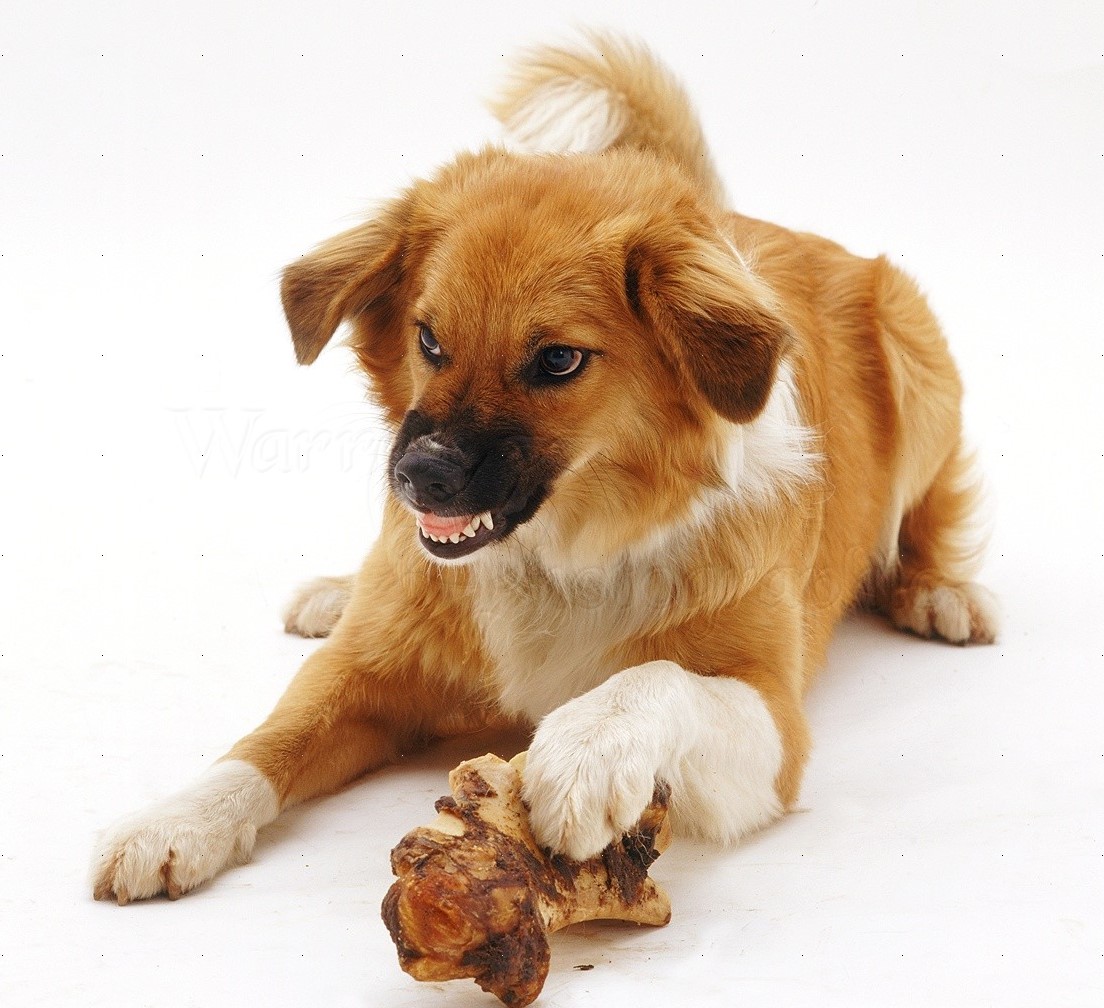
The dog on the left is displaying a behavior known as Resource Guarding. At this moment, he is actively communicating. We may not always like what he is saying, but it is vital to acknowledge that he is expressing his internal feelings in the only way he currently knows how. Rather than challenging or punishing this display—which often intensifies the dog’s anxiety—we need a structured, science-based plan to safely address the underlying cause of his insecurity.
I will work closely with you to help you uncover what is driving your dog’s behavior and outline exactly what a successful solution looks like. While many dogs who appear aggressive are simply reacting to their environment, I maintain clear professional boundaries for safety.
I choose not to accept severe aggression cases. For these specialized needs, I highly recommend consulting a board-certified Veterinary Behaviorist (DACVB) or a certified Fear Free professional specializing in advanced fear and aggression management.
The foundational life skills and behaviors I am delighted to help you master include:
- On-leash handling and polite loose-leash walking
- Managing common challenges like door dashing, jumping up, barking, and counter surfing
- Calming over-excitement or reactivity on walks and at the front door
- All essential puppy and companion dog manners, including sit, down, stay, a reliable recall, settling on a mat, and taking treats politely
Kokua Dog Training strictly opposes the use of electronic collars, prong collars, or choke chains. Veterinary and behavioral research has well established that mechanical constricting devices can cause irreparable physical damage to the delicate nerves, sensitive airways, and thyroid glands located in a dog’s neck. While discomfort or pressure may temporarily stop an outward action through behavioral suppression, it is fundamentally unable to teach a dog what to do instead—and often creates severe, unpredictable behavioral fallout as a direct result. Relying on physical discomfort to change behavior simply highlights a reliance on mechanical force rather than a foundational understanding of how animals actually learn in a humane, science-based environment.
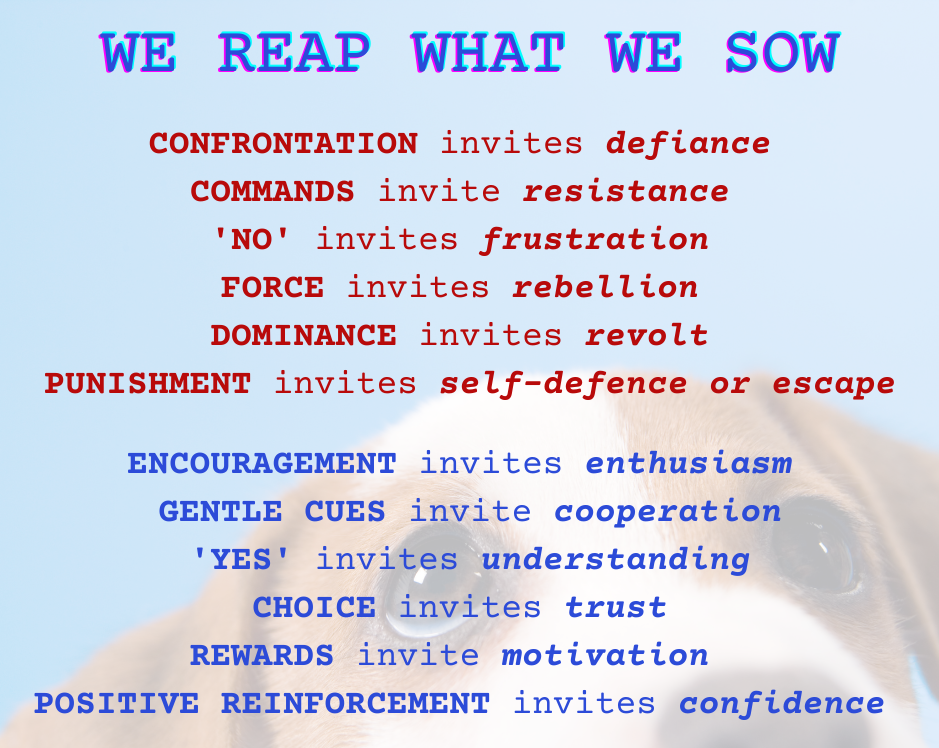
So what is the actual process for teaching vital life skills and humanely shifting behavior we don’t enjoy?
Positive Reinforcement Training is built upon layers of understanding. I approach training from a place called DO-LAND.
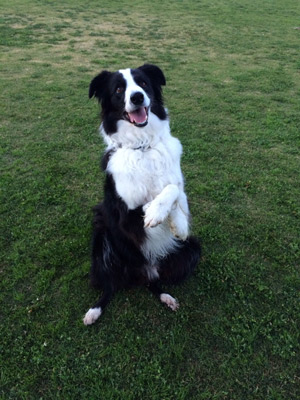
Dogs don‘t understand ‘don‘t’ or ‘NO’ because don‘t it is an abstract human concept.
A far more successful approach—one that is absolute rather than conceptual—is to step into the land of ‘DO.’ Do-Land is the supportive space where we explicitly teach our dogs exactly what we want them to do, rather than focusing on what we want them to avoid.
Instead of exhausting our energy trying to deploy constant patchwork strategies to stop a behavior (which only creates deep frustration for both ends of the leash), we train our dogs in progressive, strategic layers to build a rock-solid foundation, creating an abundant reinforcement history for the positive choices we want to see.
What is the process? Think of 5-C’s.
First: We must build a genuine Connection with our dog rooted entirely in psychological safety and trust. Without this secure emotional baseline, true learning remains difficult and unpredictable.
Second: We teach in a way that provides absolute Clarity for the animal. This always means this, that always means that. Are we truly easy for the dog to interpret from his unique perspective as a different specie than us? Are we consistent? Does our marker signal always indicae success or are we being ambiguous? Clear results require clear communication.
Third: Clarity naturally builds Confidence. As we deepen our connection and train with clarity, your dog’s confidence will naturally flourish. This is a beautiful predictable outcome of the process. He discovers, so to speak, ‘Oh, that is what you wanted. Yes, I can do that, watch me!’
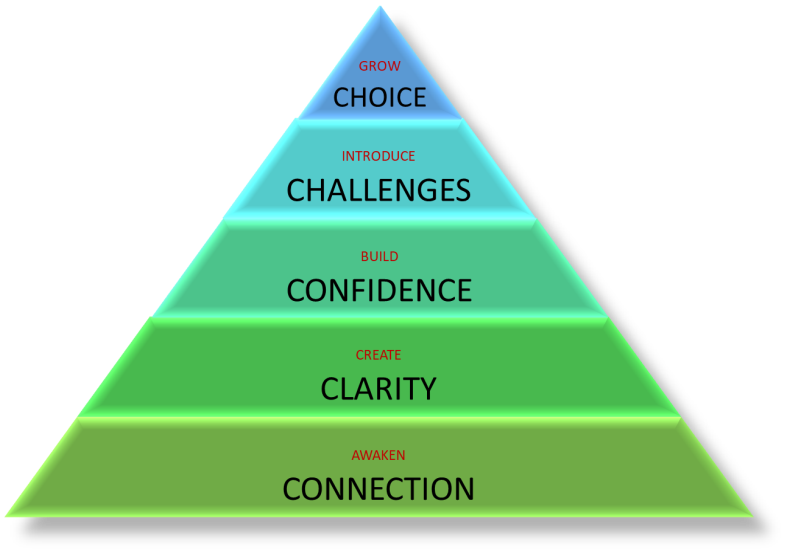
Fourth: Once our dog is confident in his understanding, we can introduce Challenges. This is where we safely proof the behavior across different environments, asking questions like: ‘Can you do this in the yard, at the local park, inside a busy store, or around novel distractions?
When you introduce a new environment, your dog will always answer you through his real-time behavior. He can only perform to the level we have actively taught. If he struggles, his behavior is simply telling us: ‘I don’t understand what you want in this specific environment,’ or ‘I don’t feel secure enough to focus right here.
It is entirely up to us as handlers to discover the root of that answer. Is he nervous, overwhelmed, or confused? Is he communicating: ‘You didn’t quite train me to do what you thought you trained me to do’
Anytime we shift the blame onto the animal—labeling them as stubborn, willful, dominant, or making excuses about their breed or __________—we relieve ourselves of our responsibility to be better teachers. Our dogs are always doing the absolute best they can with the education we have provided in the environment we have placed them in.
Now we can add Challenges. Only when our dog is confident in his understanding of what we are teaching can we then ask questions such as, ‘can you do that in this room, or in the yard outside, or at the park, or at a store, or around people or other animals you don’t know, or around distractions you might never have seen before?’.
As you introduce a challenge of ‘Do you know how to do this in the environment I’m asking you to do it in?’ (perhaps walk at your left side in public or sit in a store when another dog approaches) your dog answers you with his behavior. He can do no more than we have taught.
Perhaps his behavior says ‘no, I don’t understand what you want’, or ‘what that means’ or ‘No, I can’t do that in this environment’. It is up to us to discover why our dog’s behavior gives us his answer. Is he nervous, scared, overwhelmed, not feeling safe, confused, overly excited, etc.? Is he perhaps telling us “You didn’t train me to do what you thought you trained me to do”.
Anytime we, as the trainer, shift the blame to the animal, such as ‘he is just being stubborn, willful, dominant, is stupid’, or ’it’s his breed’ or _________, then we have relieved ourselves of any responsibility to do better.
Remember: Our dog is doing the best he can with the education we’ve given him in the environment we have asked him to perform.
Fifth: Lastly, we arrive at Choice. Your dog now willingly and joyfully chooses to cooperate because he understands the criteria, possesses the confidence to perform across multiple environments, and his fluent behavior beautifully reflects this. This is the ultimate, rewarding outcome of true, science-based training.