THE SCIENCE OF DOG TRAINING / Q&A
“Our dogs are always doing the best they can with the knowledge and understanding they have
in the environment they are in”
– Susan Garrett, Say Yes Dog Training
involves rewarding ever-closer approximations of a desired behavior, and it is the most powerful way to utilize a clicker. It functions just like the ‘hot and cold’ game we played as children. When we arrange the environment to make the right choice easy, we naturally build behaviors we can reinforce. Learning becomes effortless, allowing us to shape with absolute clarity.”
Major global authorities, including the American Veterinary Society of Animal Behavior (AVSAB). consistently find that aversive methods—such as electronic collars, prong collars, and physical corrections—pose significant risks to a dog’s welfare and do not yield better long-term results than reward-based training. By remaining firmly aligned with this undisputed scientific consensus, Kokua Dog Training ensures that your dog’s education is rooted entirely in safety, humane care, and proven behavioral science.
Q: But shouldn’t I correct my dog so he knows what he has done ‘wrong’?
A: It helps to keep in mind that dogs are ‘amoral’. They do not perceive the world through human concepts of ‘right’ and ‘wrong’, but rather ‘safe’ and ‘unsafe’. For example, a dog learns it is safe to get in the trash when you are away and unsafe when you are .present
When a dog displays behaviors that humans commonly interpret as guilt or shame, science shows we are actually witnessing appeasement signals—natural canine gestures used to deflect conflict and establish immediate safety. True kokua means learning to speak a bit of ‘dog’ so we can build a household relationship rooted in mutual trust.

Balanced trainers do not think they are intentionally being unkind to their dogs when they’re using a collar correction or electrical stimulation or shock. However, veterinary science and research tell a completely different story from the animal’s perspective. We clearly see this impact in behavioral ‘fallout’—unwanted, unpredictable side effects that can manifest immediately or surface much later in life.
Q: What if my dog is reactive?
A: Reactivity is an emotional response to a situation, environment, or stimulus. It can manifest across a broad spectrum, ranging from over-excitement to outward aggression. We can train behavior, but we cannot train emotions. Rather than punishing an emotional response, we utilize systematic desensitization and counter-conditioning to help your dog learn a completely different, neutral emotional association. To ensure your dog’s psychological safety, Kokua Dog Training strictly avoids aversive punishments or overwhelming techniques like flooding, focusing instead on building a secure foundation of trust.
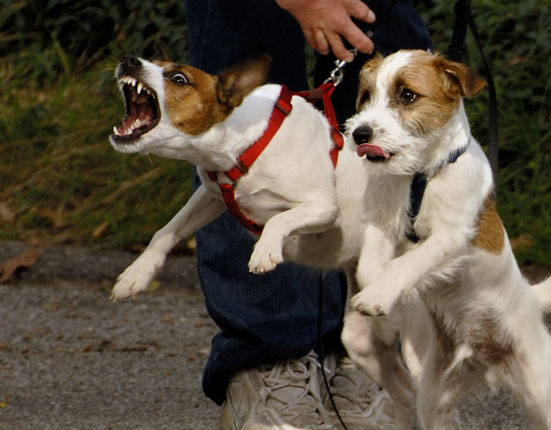

-
- They are frequently associated with the handler rather than the action.
- They do not teach your dog what to do instead.
- They create internal fear and anxiety.
- They actively inhibit learning, focus, and creativity.
- They can cause or exacerbate severe behavioral problemsIf used to force a behavior, that behavior is performed solely out of avoidance rather than true understanding.
Q: What about me being a pack leader and not letting my dog be dominant?
A: Modern behavioral science has thoroughly debunked the ‘alpha’ and ‘dominance’ models of dog training. This outmoded theory stems from an early misconception of wolf behavior. From Outmoded Notion of the Alpha Wolf by David Mech: the world-renowned senior research scientist who originally popularized the term in his 1968 study, has spent decades correcting the record. Dr. Mech explicitly states:
“The concept of the alpha wolf is well ingrained in the popular wolf literature at least partly because of my book “The Wolf: Ecology and Behavior of an Endangered Species,” written in 1968, published in 1970, republished in paperback in 1981, and currently still in print, despite my numerous pleas to the publisher to stop publishing it….One of the outdated pieces of information is the concept of the alpha wolf. “Alpha” implies competing with others and becoming top dog by winning a contest or battle. However, most wolves who lead packs achieved their position simply by mating and producing pups, which then became their pack. In other words they are merely breeders, or parents, and that’s all we call them today, the “breeding male,” “breeding female,” or “male parent,” “female parent,” or the “adult male” or “adult female.” In the rare packs that include more than one breeding animal, the “dominant breeder” can be called that, and any breeding daughter can be called a “subordinate breeder.” https://davemech.org/
A: As noted by world-renowned trainer Victoria Stilwell, founder of the Victoria Stilwell Academy and host of Animal Planet’s It’s Me or the Dog:
“Dogs are sensitive, emotional, vulnerable beings and they need us to help to teach them and to care for them…They‘re not out for world domination. Your dog doesn‘t necessarily want to be top dog. Your dog just wants to understand what is expected. It‘s ridiculous to think you need to be dominant so your dog can be submissive. If you turn a dog over and hold a dog down, and the dog gives up, this is not a dog that is showing submission; it is a dog who didn‘t have a choice and shut down. Dominance training methods are dangerous and rarely teach dogs. Positive reinforcement methods allow dogs space to think and they are effective.”
Q: How Can We Get Behavior?
A: There are a variety of ways to train behavior. A few include:
- Capturing – wait for it to happen – good for behaviors that dogs do automatically
Example: captured sit or down- Dog sits: we mark and treat, dog repeats the behavior
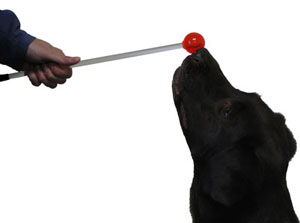
- Targeting – use a target to ‘get‘ the dog into position
Example: targeted down, roll over, spin: Teach the dog to touch a wooden spoon and then move the spoon so the dog follows it while reinforcing in incremental layers.
- Shaping involves rewarding ever-closer approximations of a desired behavior, and it is the most powerful way to utilize a clicker. It functions just like the ‘hot and cold’ game we played as children. When we arrange the environment to make the right choice easy, we naturally build behaviors we can reinforce. Learning becomes effortless, allowing us to shape with absolute clarity.
Q: What about Luring?
A: While lures can be useful initially, behavioral neuroscience shows that excessive luring can blend food directly into the tracking process, which actually slows down a dog’s independent problem-solving. There are far superior ways to get faster, clearer, and cleaner results by teaching your dog to think and choose independently.

Q: What about Clicker Training?
A: Clicker, or marker, training is a modern, highly effective framework utilized across all professional animal training. It is firmly rooted in the established sciences of behaviorism (behavior analysis), ethology (animal behavior), and neuroscience. By utilizing a clear acoustic marker, we can instantly tell a dog exactly which choice earned the reward, speeding up communication and removing all guesswork from learning.

Q: What is Clicker Training?
A: Clicker training” is a simple way of saying “training with a marker signal.” Using a marker signal is a science-based teaching method where the signal identifies the exact moment the animal is correct. While a small hand-held device called a clicker is commonly used, this signal can be a whistle, a tongue click, a flashlight beam, a thumbs-up, a verbal “yes,” or any other consistent cue that clearly stands out to the animal. The marker is always followed by a high-value reinforcer—such as a treat, a favorite toy, or access to a desired activity.
According to the scientific principles of Operant Conditioning, because the animal was positively reinforced for his behavior, he is highly likely to repeat the action. All animals respond to the science of marker training, from the smallest insect to the largest whale. It is a force-free method of communicating across species.
- Clear, bidirectional inter-species communication.
- Achieving training goals through positive reinforcement, trust, and mutual respect.
- Encouraging your dog to become an active, enthusiastic participant in learning.
- Building a joyous, fulfilling bond with your companion.
Q: What kinds of behaviors can be trained with a marker?
A: This clear form of inter-species communication is an effective, safe, and humane way to teach any animal any behavior that it is physically and mentally capable of performing. Advanced trainers routinely utilize these methods with horses, dolphins, bears, and sea lions. It is equally effective across highly divergent species, including birds, guinea pigs, marine life, and reptiles—virtually any animal is capable of learning this way. When applied to human education, this precise methodology is known as TAGteach.
Q: What are the benefits of Clicker Training?
A: Clicker-trained animals develop an active, enthusiastic love for learning. Because they must actively solve problems during the training process, they retain behaviors years later with deep cognitive awareness, creating a deeper neurological retention than passive, mechanical compliance. As a direct result of this past success, they build profound environmental confidence and remain highly motivated because they trust that the outcomes of their efforts will be pleasurable.
Q: Will I have to use a marker forever?
A: No, absolutely not. Once a behavior is reliably on cue, you no longer need to use the marker unless you want to train a completely new behavior. The marker is simply a clear, temporary bridge used to build a common language. You don’t even have to use a physical clicker device; you can use any consistent, clear sound or light cue. For example, a distinct flashlight signal works beautifully for deaf dogs or aquatic training.
Q: Why can’t I just use food or praise? Isn’t that still positive training?
A: Yes it is, but there are a few special nuances that make a distinct marker signal significantly more effective than just a treat or verbal praise alone:
- The snapshot effect: The marker acts like a high-speed camera in the dog’s mind, capturing the precise snapshot of the correct choice. With standard praise, rewards are typically delivered after the action is finished, making it harder for the dog to link the two in their mind.
- Absolute precision: By pinpointing the exact micro-second of success, communication becomes remarkably rapid and clear, allowing your dog to learn desirable behaviors with incredible speed.
- Neutral and distinct information: The marker provides a consistent, non-emotional cue so your dog always receives identical information, entirely separate from other everyday background noises.
Q: If I don’t use a command, how will my dog know what we are working on?
A: Your dog is undoubtedly very smart, but he is not born knowing our spoken language. In clicker training, we add the cue (or word) after the dog has already learned to perform the physical behavior. In effect, we give the behavior a name once the dog is doing it. We add a name to the behavior so that we can invite the dog to perform the action on a clear cue. While shifting away from traditional, heavy “commands” can be a new concept for handlers to get used to, it is extraordinarily effective.
Q: There is so much to know and it is all so new. What if I make mistakes?
A: The wonderful thing about marker training is that it is a completely gentle, force-free way of teaching. If we make a training mistake, it simply means it may take a little longer to communicate a specific behavior, but that doesn’t matter to our companions. Our dogs are incredibly resilient, forgiving partners, and you will never cause your dog or your relationship any harm with marker training.
Q: Can a dog previously trained with traditional methods learn with a clicker?
A: Absolutely. “Crossover” trainers are often amazed at the positive shift that occurs when dogs are invited to use their minds independently. Previously hesitant or shut-down dogs frequently transform into enthusiastic, creative learners. To introduce clicker training to a dog with a traditional training background, avoid starting with a behavior they already know. Instead, try something completely new and engaging, such as a fun trick, keeping the initial sessions brief and highly rewarding.
Important Consideration: Dogs developed through reward-based learning can experience significant distress if later subjected to traditional, aversion-based corrections. Introducing physical punishments into a previously positive framework often causes an animal to struggle with known behaviors, leading to situational anxiety, environmental avoidance, and unpredictable responses. When fear or conflict enters the dynamic, the foundational clarity, trust, confidence, and joy essential for a reliable relationship are replaced by confusion and a severe breakdown in trust.